Get Biofuel Campaign & Finder
A campaign site with a custom station finder and route planner that grew its audience 6×, turning biofuel education into practical action.
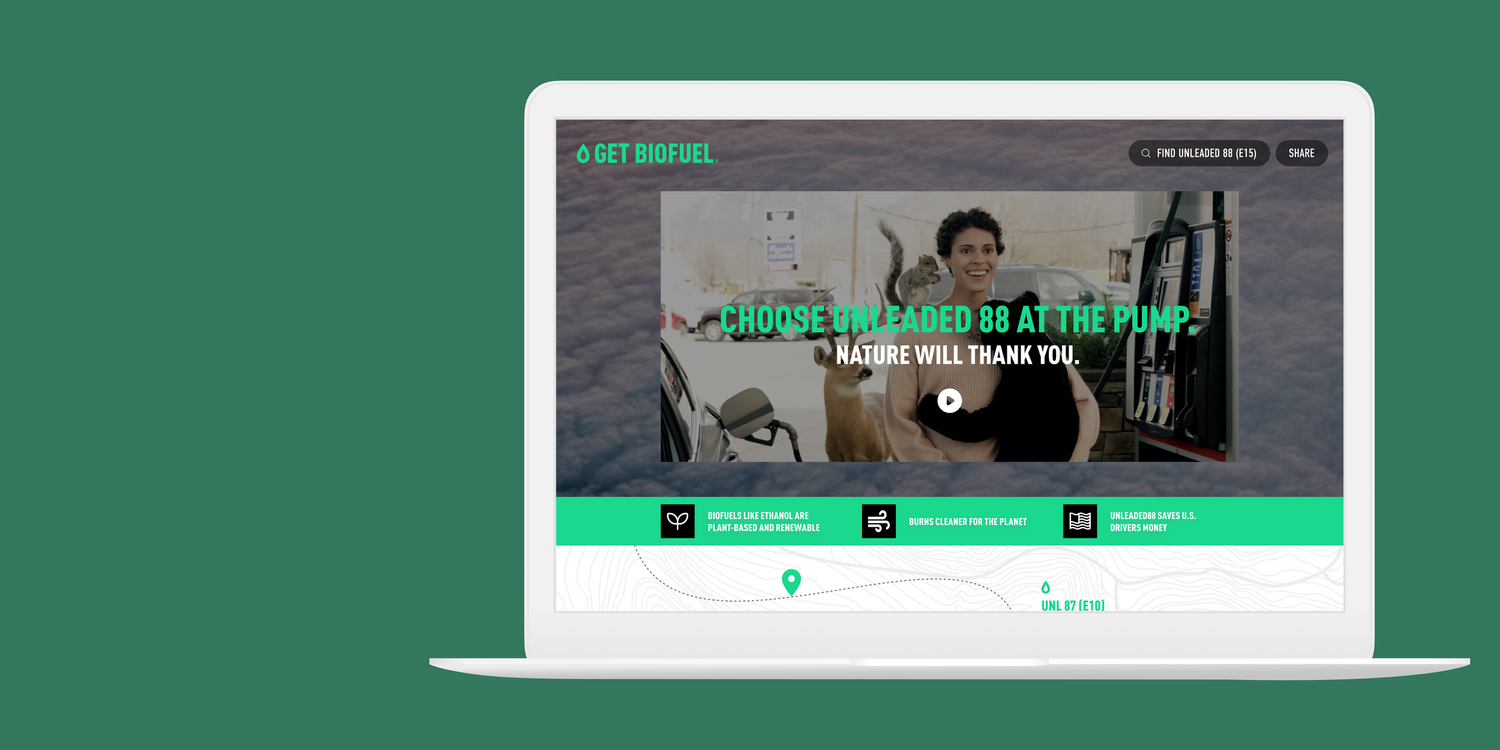
Overview
Plenty of drivers want a cleaner option and have no idea higher ethanol blends exist, are sold nearby or work in the car they already own. I designed a campaign site that answered all three: scannable fuel facts, influencer posts, a custom Google Maps biofuel finder and a trip planner that routed drivers past available stations. Google Maps put hard limits on what the tools could display, so the honest boundaries became part of the design. The campaign's audience grew 6×.
Context & Constraints
The Get Biofuel campaign, supported by Growth Energy, needed to reach everyday drivers who wanted cleaner options but often did not know higher ethanol blends were available or compatible with their cars. The site had to feel approachable and shareable rather than technical.
The campaign's requirements included social posts from influencers who believed in the cause, educational facts and figures, a custom map to find biofuel stations, a trip planner showing routes with fuel stops along the way, layered brand imagery and video spotlights. A major technical constraint was Google Maps' limitations on what station and fuel information could be displayed and how it could be filtered.
My Role
I owned the design of the Get Biofuel campaign site: the information architecture, the station finder, the trip planner, the visual system and the content hierarchy. The call that made the site convert was treating the finder and the planner as the primary tools rather than burying them behind the education content.
The trip planner went through several rounds with Growth Energy and the campaign stakeholders, and each round narrowed what the Google Maps data could honestly support. Designing those boundaries took as much care as designing the features inside them.
How I Approached It
I started by clarifying the core user jobs: understand why biofuels matter, find stations that offer them, plan real trips that include those stops and share the message with others. Influencer content and short video spotlights became the social proof layer. The facts and figures were designed to be scannable and credible without overwhelming the page: emissions reductions, compatibility with cars from 2001 onward, availability across dozens of states and miles already driven on higher blends.
The interactive core centered on two tools. The biofuel finder used a custom Google Maps implementation so drivers could locate Unleaded 88 and other blends near them. The trip planner let users set a start and end point or choose suggested routes and see biofuel locations along the way. Layered imagery and a consistent visual language reinforced the brand as clean, American-made and practical rather than purely activist.
Because Google Maps restricted certain data displays and filtering options, the trip planner went through several iterations with stakeholders. Each round focused on what information could reliably surface, how to keep the route experience clear and how to set accurate expectations about station availability.
Key Decisions & Trade-offs
The biggest decision was to treat the station finder and the trip planner as the primary conversion tools rather than burying them behind long educational content. Education still mattered, but finding a station or planning a greener route needed to feel immediate.
On the map side I accepted Google's data limitations and designed around them instead of forcing incomplete information. That meant clearer messaging about what the tool could and could not show, plus iterative refinements so stakeholders felt the planner was both honest and useful. I also prioritized shareable influencer posts and short videos so the site could fuel organic social reach rather than relying only on paid media.
Results
The finished site gave drivers a single place to learn the differences between fuel types, see real impact numbers, locate biofuel stations, plan routes that included those stops and share videos and posts that supported the cause. The custom map and trip planner turned a complex availability problem into a practical tool, and the campaign's audience grew 6×.
Michael is an excellent addition to any team! He is not only an amazing product designer, he also incorporates user perspective through interviews, research and pure knowledge. He adds value by contributing with a mindset of a product owner and puts effort to make sure the product will succeed in all phases from planning to go-live. We have worked together in six different projects that started from the ideation phase and include mobile, widgets and web. In all projects Michael has been fundamental to the team!
Reflection
Working within Google Maps' constraints taught me how important it is to design the boundaries of a tool as carefully as its features. Multiple stakeholder rounds on the trip planner were essential. Each pass clarified what "good enough and honest" looked like. If I approached a similar location-plus-routing project today I would prototype the data limitations even earlier with real station feeds, so the interaction design and the technical constraints evolve together from the start.